Hardware Tex Pert

  • Subscribe to our RSS feed.
  • Twitter
  • StumbleUpon
  • Reddit
  • Facebook
  • Digg
Showing posts with label Desktops. Show all posts

Tuesday, 15 March 2011

How to Install a 3 Port Ieee 1394 Card

Posted on 15:00 by Unknown


Many new devices are constantly being created that require fast connections and power from your personal computer (PC). While the universal serial bus (USB) is fast and more commonly used, the 1394 FireWire card is even faster and runs a larger amount of industrial peripherals for your PC. Like most adapter slots, most computers do not come with enough, making it convenient to install an additional 1394 card to your PC.

1). Turn your PC off.

2). Unplug the power supply of your PC.

3). Remove the case of your desktop PC. (As cases vary, consult your user manual if you have difficulties.)

4). Locate an open PCI Express slot.

5). Unscrew and remove the faceplate that corresponds with the PCI Express slot you wish to use.

6). While holding your screwdriver and nothing else, touch a large metal object with the screwdriver to discharge any static electricity.

7). Slide the 1394 FireWire card into the PCI Express slot until you hear a small plastic click. The connections need to face the back of the computer and the chips need to face the top of the computer. Don't worry too much because there is only one way to fit the card in.

8). Take the screw from the faceplate and use it to secure the 1394 card to the PC.

9). Replace the computer case.
Read More
Posted in Desktops, FireWire, Hardware Support, PC Support, Technical Support, TechSupp247, Three Port IEEE | No comments

Monday, 14 March 2011

Visual Display Unit Characteristics

Posted on 10:00 by Unknown


 Computers are a common part of the lives of most individuals. However, like the operation of many household appliances, computer desktop owners do not normally comprehend how their devices work. Visual display units or VDUs, are the monitor part of a desktop computer, which allow users to see the information they work with.

Types
Three types of computer monitorsor visual display units are available. These are the LCD flat panel, the CRT or cathode ray tube monitor and the TFT-LCD monitor. CRT VDUs are enclosed in a large box-shaped casing and represent the older types of computer monitors that exist today. LCD, liquid crystal, monitors are flatscreen, thin visual display units that take up much less space than CRTs. In addition, the LCDs come in widescreen as well as standard screen models and can be designed with add-ons, such as Super Video Graphic Display Array and Digital Video Interface technologies. TFT-LCD monitors are thin film transistor monitors.

Operation
An electronic beam within the visual display unit consistently scans the screen and collects data from the memory. Display memory is then transferred into video signals and in turn, the video signals manipulate the electronic beam, affecting what is shown on the display. This type of scan is known as a Raster scan. Once the electronic beam has been altered, that beam focuses on the phosphorous material that coats the inside of the visual display unit, causing the screen to illuminate.

Magnetic Fields
All electronic devices emit magnetic and electrical fields to some degree. Older visual display units that contain tubes inside the display screen have higher magnetic fields than flatscreen display units. Additionally, display units with internal tubes also emit low-intensity X-rays and non-ionizing radiation. Yet the radiation is quite minimal and not considered a health risk. Flatscreen display units, on the other hand, have no internal tubes and emit zero X-rays or radiation.

Sizes
Visual display units come in a variety of sizes. Monitors are available in 15-inch, 17-inch, 19-inch and 21-inch styles. The size of the monitor is the size of the screen, not the size of the entire monitor. Fifteen-inch monitors are sufficient for casual computer users, while 17-inch screens are more acceptable for individuals that use their computers frequently. The 19-inch and 21-inch monitors, on the other hand, were created for individuals who use their computers for design and editing.


Read More
Posted in Desktops, Hardware Support, PC Support, Technical Support, TechSupp247, Visual Display Unit | No comments

Monday, 21 February 2011

Vesa VGA Connector

Posted on 19:30 by Unknown

What Is a Vesa VGA Connector?

Cable clutter is a problem that can be frustrating and counterproductive when setting up a workspace. The VESA connector attempts to solve this problem by combining many different signals into one wire.

Background
1). VESA is an acronym for the Video Electronics Standards Association, which sets standards for PC and computing environments. The VESA connector is capable of incorporating video, audio, printer, Firewire and USB connections into one wire.

Central Connection Point
2). The monitor acts as the hub for all incoming hardware connections such as the mouse, keyboard and printer. The VESA connector directly connects the monitor to the PC hardware via a 34-pin MicroCross Molex pin and socket on both sides of the wire. This essentially eliminates the need to connect each individual device to the PC directly.

Evolution
3. The VESA connector was later renamed the VESA plug and display connector. Eventually, DVI replaced the VESA connector due to its ability to support high bandwidth and enforce digital content protection.
Read More
Posted in Desktops, Hardware Expert, PC Support, Technical Support, TechSupp247, Vesa VGA Connector | No comments

Monday, 7 February 2011

Choose a Desktop Computer

Posted on 14:00 by Unknown

Shopping for a computer doesn't need to be hard. First think about what you need. Are you looking for a computer to perform basic tasks or to meet special requirements? Then do a little homework, and finally go shopping armed with that knowledge. You'll get a computer you can be happy with, and you'll get the best value for your money.
 
 Before you shop
  1. Decide if you're better served by the PC/Windows platform or the Macintosh. You can generally get a faster computer for your money by choosing a Windows machine, but Macs come with more easy-to-use built-in software. Top brands are Dell, Hewlett- Packard, IBM, Gateway and Toshiba. Apple, of course, makes the Macintosh.
     
  2. Think about whether this machine will need to work with your office or school server. Exchanging files between platforms is less of an issue than it used to be, but it's still worth noting.
     
  3. Ask your friends and co-workers in similar lines of work what machines they have, where they bought them, if there were any problems, and whether they're happy with their choices.
  4. Expect to spend $1,000 to $2,000 for a general-purpose machine, although you can find desktop computers for anywhere from $400 to $10,000.
The basics

  1. Realize that if you buy a super cheap computer at a warehouse store or discounter, you're going to be on your own. Technical support from the major manufacturers tends to be a lot better.
     
  2. Buy as much random-access memory (RAM), or system memory, as you can afford. At a bare minimum, get 128 megabytes (MB); 256 MB or 512 MB is preferable. (For a Macintosh, get at least 256 MB.) Memory is more critical than a faster processor
  3. Get at least two universal serial bus (USB) connections and a FireWire (also called IEEE 1394) connection. These will connect peripheral devices, such as a printer, PDA, digital cameras and camcorders, scanners and game controllers.
  4. Get a CD burner so you can back up valuable data and make your own music CDs. Look into a DVD burner too if you're involved in film making or editing, but remember that there are multiple competing standards; computer-burned DVDs might not play in your home DVD player. Make sure your machine has a DVD drive if you want to watch movies on your computer.
     
  5. Ask about upgradability if you intend to use this computer for a long time, which is considered three or more years.
  6. Choose any current computer model from the major manufacturers with a high degree of confidence if you simply want to send e-mail, surf the Web and do word-processing.
Special considerations

  1. Get high-quality graphics and sound if you plan to play games. Look for a system that has a graphics card with a coprocessor, and 5.1 Surround sound. You'll want a broadband Internet connection to play online games, and to improve your Internet experience overall.
  2. Buy the biggest hard drive you can afford--120 to 180 gigabytes (GB) is now commonplace. Get more than 200 GB if you're storing music and/or editing video. For video editing, you'll also need a video input/output card and a FireWire connection. 
  3. Add a TV capture card, and you can even have your computer function as a DVR
Read More
Posted in Connect Two Routers on One Home Network, Desktops, PC Support, Technical Support, TechSupp247 | No comments

Friday, 28 January 2011

7200 RPM Notebook Hard Drives

Posted on 13:30 by Unknown

7200 RPM Notebook Hard Drives


Five hundred, 640 and now 750 GB. Three quarters of a terabyte are now available at the most important 9.5 mm height on the 2.5” format. This is the form factor that is utilized in more than 95% of all laptop and notebook designs, including most netbooks. The latest 7200 RPM drives from Samsung, Seagate and Western Digital.

With the entire buzz in storage gravitating around SSDs, everything seems to be quiet in the hard drive space. While solid state drives have, in fact, long overtaken hard drives in terms of high performance and low power consumption, mainstream buyers are still a long ways away from swapping over to large SSDs. The cost per gigabyte is simply too high still. Moreover, they do not provide sufficient storage capacity for consumers (or at least for what consumers many times believe they should be able to store). The truth is that 500 gigabytes look far better than 64 or 128 GB to folks who think they have, or will have, gobs of digital data. But the truth is also that a notebook with a hard drive may very well provide sufficient performance for non-enthusiasts.

Making that choice always requires a balance between what you need and, more importantly, what you expect. More folks are familiar with common performance limiters, like insufficient memory, too-slow of a CPU, or an inadequate graphics processor. The issue of limited hard drive performance is less-easily diagnosed. But once you spend some time on a system armed with an SSD, you won't want to switch back to mechanical storage. Unfortunately, this remains but a wish for many folks, as price tags are great for forcing us back to earth.

In this light, conventional notebook hard drives that spin at 7200 RPM are still quite a good choice, as the throughput of almost 120 MB/s (~60 MB/s minimum) is not bad in the greater scheme of things. As long as you have a decent amount of system memory (4 GB or more nowadays), the number of heavy-use situations where a hard drive limits performance should be kept to a minimum. And in exchange, you get access to a lot more free space: 500, 640, or 750 GB on the latest product generation.
Read More
Posted in Desktops, Hardware Support, High Speed Hard Drives, PC Support, Technical Support, TechSupp247 | No comments

Friday, 21 January 2011

How to Convert Headphone Mono Jacks to USB for VoIP

Posted on 12:30 by Unknown

How to Convert Headphone Mono Jacks to USB for VoIP

When setting up a pair of headphones or speakers with Voice over Internet Protocol (VoIP) or other audio applications, you typically insert the audio plug connected to the speakers into a compatible port on the computer. You can also use the USB port, but you must convert the audio signal streaming through the USB port into the headset using a mono audio adapter.

1). Plug the USB connector on the USB Mono Audio Adapter into the computer's USB port.

2). Insert the audio cable of the headphone or speaker into the "Audio Out" port on the USB Mono Audio Adapter. This port may have a headphone logo right next to it.

3). Turn up the volume on your headset or speakers. All speakers have a volume dial. Some headsets and USB Mono Audio Adapters also have volume keys.
Read More
Posted in Convert Headphone to USB for VOIP, Desktops, Hardware Support, PC Support, Technical Support, TechSupp247 | No comments

Uses of a Desktop Computer

Posted on 08:30 by Unknown

Uses of a Desktop Computer

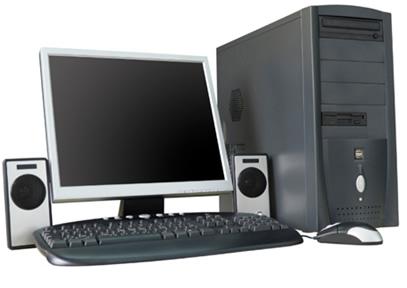
In 2011, desktop computers are used for a variety of purposes, including graphic design, data entry, research and gaming. Whether you're in an office or at home, you've likely encountered the personal computer that sits atop many desks.


Graphic Design
Desktop computers are widely used in the graphic design industry. By using various computer software programs, including InDesign, Photoshop and Quark XPress, graphic designers spend much of their creative time in front of a desktop computer. Connected to a keyboard and mouse, desktop computers enable graphic designers to create many items, including advertisements, logos, brochures and pamphlets.

Internet
Accessing the Internet is also a common use for a desktop computer. While many handheld computing devices also provide Web access, desktop computers offer a view of Web content on a larger screen and provide easier maneuverability. Using a computer to access the Internet enables users to perform many tasks, including viewing streaming video, sending and receive email, playing games and doing research. Most newspapers, radio stations and television networks offer online material, including news, weather and sports content. You can even order food using a desktop computer, whether it's from a restaurant or online grocer.

Gaming
Playing video games is another use that has come with the progression of the desktop computer. Many games are designed to be loaded and played directly on a computer, while others require logging on to the Internet. In either case, a desktop computer facilitates the gaming experience. If playing online, gamers can play against other computer users throughout the world, via the Internet. If casino-style gaming is more to your liking, a desktop computer can help you do that as well.

Business and Finance
Most offices have desktop computers that provide workers with tools and a means to complete job-related tasks. Data-entry personnel use them to input company and client information while doctor's office workers use them to keep tabs on appointments, patient contact and medical information. Writers use desktop computers to conduct research and write while customer service workers use them to keep notes and enter payment information.
Read More
Posted in Desktops, Hardware Support, PC Support, Technical Support, TechSupp247, Uses of Desktop Computers | No comments

Wednesday, 19 January 2011

How to Use Your PS3 Controller

Posted on 13:00 by Unknown
How to Use Your PS3 Controller 


Requirements:
PS3 wireless controller (SIXAXIS)
USB cable Windows XP or higher                                                           

1.      Download the file from Sony drivers’ website and save it to your desktop.
2.      Unzip the file.
3.      Connect the PS3 controller to the computer using a USB cable. Check the lights on the controller. It should be blinking
4.      Now go to the “Control Panel” from the Start menu and select on “Systems”.
5.      Click on the tab “Hardware”. Under “Hardware” tab, select Device Manager.
6.      Click Human Interface Devices in the device manager screen. Underneath will appear the option USB Human Interface Device. Right click on this and select the option “Update Driver”.
 7.      Click on Install from a list or specific location in the pop-up window. Select the option “Don't search I will choose...” on the next screen. Click Next.

8.      Click “Have disk” on the next screen and then choose browse and select Desktop. From there, click ds3 drivers and choose ds3drv1.02. Click through until you get to the file beginning Dual shock. Open this and install the file.
9.      Go back to the control panel and click on Game Controllers. Select Playstation 3 Controller and then go to Properties. Press the Home button in the middle of the playstation controller. You should then see the cursor in the box to the left of the window respond to your joystick when you move it.
Read More
Posted in Desktops, Hardware Support, PC Support, PS3 Controller, Technical Support, TechSupp247 | No comments

Tuesday, 28 December 2010

How to Install an ATI Radeon Video Card

Posted on 16:00 by Unknown
How to Install an ATI Radeon Video Card

ATI Radeon video cards are high end dedicated graphics cards produced by AMD (Advanced Micro Devices). ATI Radeon cards are used primarily for computer gaming and playing HD video, as many cards have HDMI and DVI ports to connect to HDTVs. To install an ATI Radeon card, a computer must have a PCI express slot, and the appropriate power connector for the card.
 
To install the ATI Radeon Video Card, follow the below steps:
1. Turn off the computer and unplug all the cords.

2. Open the case by unscrewing the screws on the right hand side of the case. This will release the side panel covering the motherboard.

3. Locate a PCI express slot. This slot is longer than the other expansion slots (PCI and AGP slots), Some motherboards have two PCI express slots.

4. Take off the slot cover. Each unused expansion bay on your computer will likely be covered by a metal cover which is mounted in place by a screw just inside the computer from the back of the case. Take out this screw to remove the cover.

5. Install the card. Align the card in the PCI express slot, making sure it is square with the slot, then push it in applying pressure to either side of the card, so it pushes in with uniform force. The card should pop into position and line up flush with the back of the case. You can screw the slot cover screw back in to secure the card.

6. Attach the card's power cord, if necessary. Some of most powerful video cards require a special PCI express power cord to be connected to it from the power supply.

7. Close the case, plug the cords back in and power on the computer.

8. Insert the driver CD into your CD drive and install the drivers appropriate for your operating system. ATI Radeon cards should come with a driver installation CD. You can also download drivers from AMD's website.

9. Restart your computer.
Read More
Posted in Desktops, Hardware Support, Install SATA drivers, Sata Drivers, Unable to detect SATA hard disk | No comments

How to Check Network or Wireless Adapter Driver Status in Windows 7

Posted on 10:30 by Unknown
Its is advised to check network or wireless adapter driver status in Windows 7 after installing the driver in order to make sure it works well before trying to connect to wired or wireless network. This avoids facing network connectivity problem due to incorrect or problematic driver.

To check Network or Wireless Adapter Driver Status
1)    Go to Start and click on Control Panel.


2)    Click on Hardware and Sound.


Note: If you view Control Panel by Large Icons or Small Icons, you can just double click the Device Manager.

3)    Click on Device Manager in Hardware and Sound window.


4)    The Device Manager will appear, then locate and expand Network adapters and right click the network or wireless adapter and then click on Properties.


5) The network or wireless adapter properties window will appear, your driver works well if it shows “This device is working properly” under General tab. You can also manually configure network adapter’s driver parameters under “Advanced” tab.


Note: If your device does not work well, click on Driver tab to check driver details, update driver, rollback driver, disable driver or uninstall driver.

Read More
Posted in Desktops, Hardware Support, Install SATA drivers, Sata Drivers, Unable to detect SATA hard disk | No comments

Friday, 24 December 2010

How to install and Setup a SATA Hard Drive

Posted on 13:00 by Unknown


This article will show you how to install and setup a SATA Hard Drive without any hassle

This article is applicable for Windows 7, Vista and Windows XP.

Warning
Always remember to discharge yourself before touching the HDD. This is done by touching the metal inside the case with you hands, as showed in the picture below


Note
These are the things you will need:
  • Screwdriver to screw the side of your case off/on
  • SATA Cable
  • Molex to SATA Converter [Only needed if no SATA Power Cable is available]
  • A SATA Hard Drive


Step 1. Installing the Hard Drive into the case.

1. Take out all wires and cables from the PC. Also hit the power button located on the back of the PC where the PSU is. Unplug the mains lead from the supply.

2. Screw the side panel of the pc


3. Connect your SATA Cable to the Motherboard


4. If needed connect your Molex to SATA converter

5. Put the harddrive into one of the free slots and connect the SATA power cable and the SATA Cable (Red)


6. Put the side panel on again, and screw in the screws

7. Connect all your cables to your PC again
 
Step 2. Checking if it's working

1. Turn on your PC

2. Go into your BIOS, and look if it shows the newly installed Hard Drive along with the rest of the system info


Step 3. Formatting and Using the Hard Drive

1. Click start menu  Right click Computer in the right panel  Click "Manage"

2. Enter the "Disk Management" (Look in the left pane)

3. You should now be able to see the Hard Drive in there as Unallocated space

4. Right Click the Bar in the bottom and click "New Simple Volume"


5. Follow the wizard, choose a name, amount of space the partition should have and the Drive letter.


6. Now you can see your new Hard drive in "Computer"


This article is applicable for Windows 7, Vista and Windows XP.

Read More
Posted in Desktops, Hardware Support, Install SATA drivers, Sata Drivers, Unable to detect SATA hard disk | No comments

Monday, 29 November 2010

Different Types of Computer Processors

Posted on 07:47 by Unknown
Different Types of Computer Processors

Traditionally computer processor design and innovation has advanced at an exceedingly fast rate. As a corollary, the market for computer processors is vast and often times confusing to a first time explorer. However, learning the key feature sets and functions that set each processor apart from one another is not very difficult at all.
Brands
Since the inception of mainstream computing into the homes of society, but there has been consumer and commercial level computer processor manufacturers. The Intel Corporation is undoubtedly the first name when any consumer thinks of the word processor is mentioned. Intel has been producing the most top-line computer processors for several decades now. AMD or Advanced Micro Devices is Intel's only true competitor in the computer processor market producing computer processors, which rival the speed and power of Intel's.

Architecture
When considering the architecture of a computer processor, there are really only a few key factors to consider. Whether the processor has a 32-bit or 64-bit core determines whether or not the processor can run your software correctly. The amount of on die processor cache memory is also of importance, as this integrated memory space is where processor instructions are held before execution. Finally, is the system a single, dual or quad core processor? While multicore processors do have their advantages there is still a lack of software able to utilize multicore processors.

Clock Speed
The clock speed of a computer processor determines the rate at which a processor executes instructions on data. Today this rate of execution is expressed in billions of instructions per second. Though having a computer processor with a high clock speed is advantageous, it alone is not the only factor that dictates overall system performance. Higher clock speeds increase all system tasks, such as web browsing, movie encoding, and system utilities like anti-virus software.

Maintenance
Computer processors must be maintained according to their manufacturer's specifications in order to perform at their full potential. All too often consumers will pick an expensive cutting edge processor while neglecting support hardware for their processor. Different processors require different power supplies, proper heat sink/ fan combos, and adequate memory in order to function correctly. Above all, different processors require different cooling solutions. Each processor has its own TDP (Thermal Design Power) which is an indication of heat output which must be dissipated.

Current Models
The most recent offerings from Intel and AMD are the Core i7 quad core and Phenom II quad core processors respectively. The Core i7 supersedes the Core 2 series of dual and quad core Intel processors and the Phenom II supersedes the Phenom I dual and quad core model AMD processors. Outside of extreme gaming or high-end 3D graphics applications, even the Phenom II and Core 2 older model processors are more than adequate for the home user and come at a much lower price point in most cases.
Read More
Posted in Desktop Support, Desktops, Hardware Support, PC Support, Processor Support, TechSupp247, Types of Processors | No comments

Thursday, 25 November 2010

Advantages and Disadvantages of External hard disk drives

Posted on 15:47 by Unknown
Advantages and Disadvantages of External hard disk drives
External drives are arguably the biggest growth area in data storage of recent times. They offer the possibility of a readily transportable repository for all a user’s valuable data, documents, photographs, music and movies. Alternatively they can provide a destination for a user to backup their valued files to, in case the data held on their internal storage is lost, or the internal storage fails. But are they lulling users into a false sense of security?

They are being offered with ever increasing capacity and at ever decreasing prices. Many are advertised using ‘pence per Gigabyte’ prices as a lure. However a few notes of caution arise from the recent spate of external hard drives being sent for Data Recovery.

·        Unlike the internal hard drive in your PC, which is held securely in a rarely moved case, external drives are being carried about from place to place and as a result they get dropped, knocked, crushed and subject to all manner of abuse and trauma.

·        They have trailing power and/or data cables that only too easily serve to pull them over, drag them off desks or otherwise expose them to further risk.

·        Unlike the hard drive in your PC or Laptop, which is cooled by a fan, external drives seldom have cooling fans and, in an effort to make them as small as possible, the hard drive(s) inside rarely have much free air space around them. This can result in overheating with the attendant problems that causes.

·        External drives are an excellent destination for backing up files, but this only truly safeguards your data if the files are initially saved to an internal drive and then backed up to the external. If the external becomes the default place for files to be saved to, the data is not being backed up, it is simply being saved to a destination where it is more likely to be lost.

The hard drives found inside externals are no less likely to fail than an internal drive. Indeed where the drives inside an external are invisible to the user and perhaps chosen to keep costs low, might they be more likely to fail even without the extra risks highlighted above? Where external drives carry extended warranties, this might seem reassuring, but remember, the warranty will only cover repair or replacement of the drive, not the cost of recovering any valuable data stored on it.
Read More
Posted in Desktops, External Hard Drive, Hardware Support, PC Support, Technical Support, TechSupp247 | No comments

Friday, 19 November 2010

Types of Computer Hard Disks

Posted on 12:44 by Unknown
Hard disk types

A hard disk drive (hard disk/hard drive/HDD) is a non-volatile storage device for digital data. It features rotating rigid platters on a motor-driven spindle within a protective enclosure. Data are encoded magnetically by read/write heads that float on a cushion of air above the platters.

Hard disk manufacturers quote disk capacity in SI-standard powers of 1000, wherein a terabyte is 1000 gigabytes and a gigabyte is 1000 megabytes. With file systems that report capacity in powers of 1024, available space appears somewhat less than advertised capacity.

The first HDD was invented by IBM in 1956. They have fallen in cost and physical size over the years while dramatically increasing capacity. Hard disk drives have been the dominant device for secondary storage of data in general purpose computers since the early 1960s.[5] They have maintained this position because advances in their areal recording density have kept pace with the requirements for secondary storage.[5] Form factors have also evolved over time from great standalone boxes to today's desktop systems mainly with standardized 3.5-inch form factor drives, and mobile systems mainly using 2.5-inch drives. Today's HDDs operate on high-speed serial interfaces; i.e., serial ATA (SATA) or serial attached SCSI (SAS).

1. IDE: Integrated Drive Electronics. IDE drives are also known as PATA drives (Parallel advance technology attachment)
2. SATA: Serial advance technology attachment
3. SCSI: Small Computer System Interface. SCSI is pronounced as skuzzy.
4. SAS: Serial Attached SCSI

Integrated Drive Electronics (IDE): - Parallel ATA (PATA), originally ATA, is an interface standard for the connection of storage devices such as hard disks, solid-state drives, floppy drives, and CD-ROM drives in computers. The standard is maintained by X3/INCITS committee. It uses the underlying AT Attachment (ATA) and AT Attachment Packet Interface (ATAPI) standards.

The current Parallel ATA standard is the result of a long history of incremental technical development, which began with the original AT Attachment interface, developed for use in early PC AT equipment. The ATA interface itself evolved in several stages from Western Digital's original Integrated Drive Electronics (IDE) interface. As a result, many near-synonyms for ATA/ATAPI and its previous incarnations exist, including abbreviations such as IDE which are still in common informal use. After the market introduction of Serial ATA in 2003, the original ATA was retroactively renamed Parallel ATA.

Parallel ATA only allows cable lengths up to 18 in (457 mm). Because of this length limit the technology normally appears as an internal computer storage interface. For many years ATA provided the most common and the least expensive interface for this application. By the beginning of 2007, it had largely been replaced by Serial ATA (SATA) in new systems.


Serial advance technology attachment(SATA): - Serial ATA (SATA or Serial Advanced Technology Attachment) is a computer bus interface for connecting host bus adapters to mass storage devices such as hard disk drives and optical drives. Serial ATA was designed to replace the older ATA (AT Attachment) standard (also known as EIDE). It is able to use the same low level commands, but serial ATA host-adapters and devices communicate via a high-speed serial cable over two pairs of conductors. In contrast, the parallel ATA (the re-designation for the legacy ATA specifications) used 16 data conductors each operating at a much lower speed.

SATA offers several advantages over the older parallel ATA (PATA) interface: reduced cable-bulk and cost (reduced from 80 wires to seven), faster and more efficient data transfer, and hot swapping.

The SATA host adapter is integrated into almost all modern consumer laptop computers and desktop motherboards. As of 2009[update], SATA has replaced parallel ATA in most shipping consumer PCs. PATA remains in industrial and embedded applications dependent on Compact Flash storage although the new CFast storage standard will be based on SATA.


Small Computer System Interface, or SCSI (pronounced skuzzy): - It is a set of standards for physically connecting and transferring data between computers and peripheral devices. The SCSI standards define commands, protocols, and electrical and optical interfaces. SCSI is most commonly used for hard disks and tape drives, but it can connect a wide range of other devices, including scanners and CD drives. The SCSI standard defines command sets for specific peripheral device types; the presence of "unknown" as one of these types means that in theory it can be used as an interface to almost any device, but the standard is highly pragmatic and addressed toward commercial requirements.

SCSI is an intelligent, peripheral, buffered, peer to peer interface. It hides the complexity of physical format. Every device attaches to the SCSI bus in a similar manner. Up to 8 or 16 devices can be attached to a single bus. There can be any number of hosts and peripheral devices but there should be at least one host. SCSI uses hand shake signals between devices, SCSI-1, SCSI-2 have the option of parity error checking. Starting with SCSI-U160 (part of SCSI-3) all commands and data are error checked by a CRC32 checksum. The SCSI protocol defines communication from host to host, host to a peripheral device, and peripheral device to a peripheral device. However most peripheral devices are exclusively SCSI targets, incapable of acting as SCSI initiators—unable to initiate SCSI transactions themselves. Therefore peripheral-to-peripheral communications are uncommon, but possible in most SCSI applications. The Symbios Logic 53C810 chip is an example of a PCI host interface that can act as a SCSI target.


Serial Attached SCSI (SAS): - is a computer bus used to move data to and from computer storage devices such as hard drives and tape drives. SAS depends on a point-to-point serial protocol that replaces the parallel SCSI bus technology that first appeared in the mid 1980s in data centers and workstations, and it uses the standard SCSI command set. SAS offers backwards-compatibility with second-generation SATA drives. SATA 3 Gbit/s drives may be connected to SAS backplanes, but SAS drives may not be connected to SATA backplanes.

The T10 technical committee of the International Committee for Information Technology Standards (INCITS) develops and maintains the SAS protocol; the SCSI Trade Association (SCSITA) promotes the technology.
Read More
Posted in Desktops, Hard Disk Support, Hard Disk Types, Hardware Support, PC Support, Technical Support, TechSupp247 | No comments
Older Posts Home
Subscribe to: Posts (Atom)

Popular Posts

  • How to Disable BIOS Settings
    How to Disable BIOS Settings BIOS is an acronym for Basic Input/Output System. It is the boot firmware program on a PC, and controls the c...
  • How to Clean all Disk's with the Diskpart Command
    Information This will show you how to use the clean command on a selected disk to delete all of it's M...
  • Difference Between Pentium Processor & Centrino
    Difference Between Pentium Processor & Centrino The Pentium Series Intel's line of Pentium processors includes more than just lapto...
  • VESA VGA Monitor
    What Is a VESA VGA Monitor? VESA is a worldwide monitoring body for a variety of computer graphics standards. They're best known for Fla...
  • How to Change the IRQ Settings in the BIOS
    Default motherboard BIOS settings usually do not need to be changed when the motherboard or computer is installed and will suffice for mo...
  • How to Wake Up a LAN
    The networking power management features on your computer allow it to save energy. The most common network power management feature used is ...
  • Check System Specification
    Computer users should familiarize themselves with the specifications of their machines. This information is valuable when it comes time to...
  • Repair an HP Laptop Power Jack
     The majority of problems with DC power jacks on HP laptop models stem directly from a crack forming between the power jack's positiv...
  • Difference Between AT & ATX Motherboards
     A bit of research into the specific features of your motherboard can help you decide what to buy, and it can protect your computer from dam...
  • Reset the Waste Ink on a Canon Printer
    The Canon ink counter tool estimates your remaining ink usage, and should be reset each time you replace your ink cartridge . This tells y...

Categories

  • Acer Aspire Factory Settings
  • Add PU to SLES
  • Advantages of Optical Mouse
  • AGP Support
  • Animal Trough In FarmVille
  • ANSI Standards
  • Asus
  • asus prime sense
  • AT and ATX Motherboards
  • Ati Radeon.
  • ATX Cabinet
  • Barcode Printer
  • Barcode reader
  • Barebone Kit
  • best i7 motherboard
  • Best seeds
  • BIOS Flash
  • BIOS IRQ Settings
  • Bios Power Management
  • BIOS Recommended settings
  • BIOS Update
  • BIOS Upgrade
  • Black screen
  • Bluetooth Compatibility
  • Bluetooth Device Support
  • Bluetooth Keyboard
  • BlueTrack technology Mouse
  • Blur Monitor Screen
  • BT Hub
  • Buying a Gaming Computer
  • Cable STB to PC
  • Card Reader
  • Cassettes to CD
  • Cat5e and Cat6e Cable
  • Cat5e Cable Types
  • CD Drive
  • Change BIOS IRQ Settings
  • Change Ink Waste Pad
  • Change Power LED
  • Change Trays in HP M3085
  • CircuitBoard Tools
  • citrix ipad
  • Clean Processor Fan
  • Clean Roller on Phaser 6120
  • Clean TrackPad
  • Clear Paper Jam on Inkjet Printer
  • CMOS battery
  • Common PC Hardware Problems
  • Compare Cartridg Toner
  • Computer Backup
  • Computer Components
  • Computer Hardware Monitoring Tools
  • Computer Power Supply
  • Computer Specification
  • Computer Storage Capacity
  • Computer Wont power on
  • Computer Workstation
  • Configure Xbox Wireless Network Adapter
  • Configuring a Mother Board
  • Configuring PC Gamepads
  • Connect CCTV to Computer
  • Connect FingerPrint Reader
  • Connect Inspiron to Lexmark
  • Connect Laptop to A/V Receiver
  • Connect Laptop to TV
  • Connect LCD to Computer
  • Connect PC to TV Wirelessly
  • Connect prjector to a computer wirelessly
  • Connect Two Computer to Act One System
  • Connect Two Computer to One Monitor
  • Connect Two Computers using USB
  • Connect Two Routers on One Home Network
  • Connect Xbox 360 to HDTV
  • Connecting 5.1 speakers
  • Convert Component Output to VGA
  • Convert Headphone to USB for VOIP
  • Convert LCD to DVI
  • Convert USB to Parallel
  • cool
  • Coxial Cable Types
  • CPU Components
  • CPU Stress Tests
  • CPU Temperature
  • Custom Personal Computer
  • D-link Wireless Router
  • Data Transfer from HDD to HDD
  • DDRAM
  • Default DVI Port
  • Delete Master Boot Record
  • Dell Recovery
  • Dell Support
  • DesignJet Printer Head Path
  • Desktop Support
  • Desktops
  • Difference Between DVD-R and DVD-RAM Discs
  • Difference between IDE and SATA Hard Drives
  • Difference between LCD and LED Monitors
  • Difference Between Notebook and Small Laptop
  • Difference between Pentium and Centrino
  • Difference Between Regedit and Regedit 32
  • Disable BIOS Settings
  • disable hybrid power
  • Disassembling a Computer
  • display self test
  • Dispose Printer Toner
  • Dual Core in smartphones
  • Dual Core Vs Quad Core
  • Dual Layer DVD
  • DVD Drive
  • DVD/CD ROM
  • DVI Port
  • Enable ATI Theater Mode
  • Enable IOMMU BIOS
  • Erase Password Protection on Hard Drive
  • Error 633
  • Expand Printer Memory
  • Extended Partition
  • External Hard Drive
  • external sound card
  • External USB
  • Facebook
  • Facebook Games
  • farmville
  • Farmville coins
  • Fiber Optic Cables Parts
  • Find a Lost File
  • FireWire
  • Fix EXE and CDD Files
  • Format Printer
  • Format Protected Disk
  • Game Console Gamepad Configuration
  • Games
  • GeForce Installing Problems
  • General Compnents of PDA
  • Graphics
  • Grapics Card Diagnostics
  • Hard Disk Failure
  • Hard Disk Jumper Settings
  • Hard Disk Partition
  • Hard Disk Support
  • Hard Disk Types
  • Hard drive
  • Hard Drive Enclosure
  • Hardware Components
  • Hardware Diagnostics Tools
  • Hardware Expert
  • Hardware Issues
  • Hardware Requirements for Firewall
  • Hardware Support
  • Hardware Testing Tools
  • Hardware Texpert
  • hardwarwe texpert
  • HDMI Motherboard
  • HDTV Tuner
  • HeatSink
  • Hibernate WakeUp
  • Hide Computer ID
  • Hide Computer Identity
  • High Speed Hard Drives
  • How to Disable Automatic Driver Installation in Windows 7
  • How to fix Keyboard not detecting by the computer
  • How to force eject a stuck DVD/CD drive
  • How to reduce noise in PC
  • How to Scan film Slides using a Flat Bed Scanner
  • How to troubleshoot no sound from computer speaker
  • How to Use a Digital Camera as a Webcam
  • How to's
  • HP 3380 Scanner
  • HP Dream Screen
  • HP Laptop Power Jack
  • HP Support
  • hybrid power
  • i7 motherboard
  • i7 processor
  • Identify Xeon Processor
  • IEEE Wiring Colors
  • iMac Resolution
  • Inkjet Hub
  • InkJet Hub Printable
  • Inkjet Multifunction Printers
  • Install AGP Card
  • Install blue-ray drive
  • Install Bluetooth Device
  • Install DSL Modem
  • install external card
  • Install Fan in Computer
  • Install Graphics Card
  • Install Internal Card Reader
  • Install Internal Modem
  • Install Laptop Skins
  • Install Network Card
  • Install Plotter Support
  • Install printer
  • Install SATA drivers
  • Install ScanDisk Cruzer
  • install sound card
  • Install TV Tuner Card
  • Install Video Card on Laptop
  • Install WebCam
  • Invertor on Laptop
  • ipad
  • ipad cloud computing
  • IPS Technology LCD
  • Itouch as a Removable Disk
  • Jaz Drive
  • keep
  • Kensington Lock
  • Keyboard Installation
  • KVM Switch
  • Laptop
  • laptop doesn't power on
  • Laptop Glossy Screen
  • Laptop Hardware Failures
  • Laptop IR
  • Laptop LCD Inverter
  • Laptop Life
  • Laptop NumLock
  • Laptop Overheating
  • laptop support
  • Laptops
  • Laser Printer vs Ink Jet Printer
  • Laser Virtual Keyboard
  • Lenovo Ideapad Laptop
  • Lenovo Support
  • Linksys E1000 wireless-N router
  • Linksys USB wireless Adapter
  • Linksys Wireless N Home Router
  • Linksys wireless PCI Adapter
  • Linksys wireless-N Adapter
  • Linksys WRT54G2 Wireless Router
  • Locate Lost Files
  • Logical Drives
  • Magic Color
  • Magnetic Storage
  • Maximize Computer Brightness
  • Membrane Keypads
  • Memory Card types
  • Memory Module
  • Missing page break
  • missing redo
  • missing undo
  • Mobile Phone
  • Monitor beeping
  • Monitor blank
  • Monitor Issues
  • monitor self test
  • More farmville coins
  • MotherBoard Jumper settings
  • Motherboard Support
  • Motherboard Support Chipset Support
  • Mouse Pointer Disappears
  • Netgear wireless Access point
  • Netgear Wireless adaptor
  • NETGEAR Wireless Dual Band Gigabit Router
  • Netgear Wireless USB Adapter
  • Network Card
  • Network Switch
  • new block editor
  • New Seagate Harddisk
  • No display
  • Notebook Mouse
  • Notebook Screens
  • Nvidia Card Support
  • Nvidia Drivers
  • Nvidia GF114
  • Nvidia graphics card
  • NVRAM
  • Online games
  • onlive
  • Open Explorer.exe
  • Optical Drive
  • Optical Storage
  • Optical Storage More Durable than Magnetic Storage
  • Output devices
  • Parallel Computers
  • Parts of the System Case
  • PC Card to USB
  • PC Case
  • PC Speakers for Home Stereo
  • PC Support
  • PCI
  • PCI Adapter
  • PCI Express
  • PCMCIA Card
  • PDA Backup
  • PDA Soft Reset
  • PDA Warm Reset
  • Phaser Printer
  • Plasma Screen
  • Play Music on another computer speakers
  • Plotter Support
  • Power cycle
  • Power Supply
  • Power supply connectors
  • Power Switch
  • Primary Partition
  • Print a Color Image
  • Print Black and White on Canon MX850
  • Printer
  • Printer Color Alignment Issues
  • printer support
  • printers
  • Processor Fan
  • Processor Support
  • PS3 Controller
  • Rack Mount Power Supply
  • RAM
  • RAM Types
  • RAM Upgrade
  • Record Stereo to Computer
  • Remote Reader
  • Remove Ribbon Cable
  • Repair Maxtor Bad Sector
  • Repair Raw Drive
  • Replace CMOS battery
  • Replace HDMI with Ethernet Cables
  • Replace Ink in Canon MP970
  • Replace Laptop Battery
  • Replace Laptop DVD/CD ROM
  • Replace Laptop Hard Drive
  • Replace Laptop Keyboard
  • Replace Laptop RAM
  • Replace LED Bulb in Laptop
  • Reset BIOS Password
  • Reset Dell Axim Password
  • Reset Int Settings
  • Reset Laptop
  • Reset Low Ink Messages
  • Reset PDA
  • Reset Waste Ink on Canon Printer
  • Restore Fuction on HP Laptop
  • Return Toshiba to Orginal Settings
  • Safely Remove Hardware
  • Sandy Bridge Processor
  • Sapphire Radeon HD 6870 Vapor
  • Sata Drivers
  • Save Laptop Battery
  • Scan Documents
  • Scanner Support
  • SCSI to USB Adapter
  • SDRAM
  • Seagate Barracuda
  • Second Generation Intel Processors
  • Secondary IP Addresses With HSRP
  • Setup Computer to a Projector
  • setup dual monitors
  • Smart Switch
  • Smartphones
  • SMPS
  • Software to test Computer Hardware
  • Solid State drive
  • Sony Vaio USB
  • Specific Hardware not Working
  • spyware
  • Stream TV on VLC
  • Switch PC Hardware
  • Synaptics Pointing Deive
  • Sync Mobile with PC
  • System Crashing or Rebooting
  • Tape Drive Installation
  • Technical Support
  • TechnicalSupport
  • TechSupp247
  • The best online game
  • Thermal Grease
  • Thermal Printer
  • Three Port IEEE
  • Tools required while working on PC
  • Top 5 AMD Motherboards
  • Top 5 Video Crads
  • Touchpad
  • Types of Computer Mice
  • Types of DVD Drives
  • Types of Expansion Slots
  • Types of hard drives
  • Types of Input Devices
  • Types of Memory Cards
  • Types of Processors
  • UEFI Architecture
  • Unable to detect SATA hard disk
  • Unable to Scan from Konica Minolta
  • Unlock OSD
  • Upgrade Computer
  • Upgrade USB Drive
  • Upgrade WEP to WPA
  • USB 3.0
  • USB Adapter Types
  • USB Cables
  • USB Host Controller
  • USB Hub Specification
  • USB Not Working
  • USB Port
  • USB Portable Disk drive
  • USB Support
  • USB to PS2 Cable
  • USB Wireless Devices
  • Uses of Desktop Computers
  • VESA Bracket Mounts
  • Vesa Specification
  • Vesa VGA Connector
  • VESA VGA Monitor
  • VESA Wall Mount
  • VGA Shared Memory
  • Video card
  • Video Cards
  • Virtual System
  • Virus Removal Support
  • Virus Support
  • Visual Display Unit
  • Wakeup LAN
  • Ways to Keep Your PC Cool
  • Ways to Save Printer Ink
  • Web Monitoring
  • Webcam as Security Camera
  • Wet Laptop
  • windows 7 ipad. windows 7 on ipad
  • Windows 7 Optimization
  • windows 7 support
  • Windows XP Optimization
  • Wireless Access Point
  • wireless adaptor
  • Wireless Devices
  • Wireless Home Theater
  • Wireless Mouse Battery
  • Wireless Mouse Support
  • Wireless Network Types
  • Wireless PCMCIA Card
  • Wireless Printer Adapter
  • Wireless Router
  • Wireless Wep Password
  • Xeon Processors
  • Xerox Phaser 6360
  • Zynga
  • Zynga games

Blog Archive

  • ▼  2011 (313)
    • ▼  July (1)
      • Keep your laptop cool
    • ►  June (27)
    • ►  May (11)
    • ►  April (33)
    • ►  March (97)
    • ►  February (58)
    • ►  January (86)
  • ►  2010 (63)
    • ►  December (34)
    • ►  November (11)
    • ►  October (18)
Powered by Blogger.

About Me

Unknown
View my complete profile